How can we incorporate creativity into our daily lives in ways that develop unique expressions of ourselves? As an art educator, I love helping others tap into their creative potential and apply it in their daily activities. This webpage is a resource available to anyone who wishes to exercise their creative muscles. What follows are some simple things you can do to live a more creative life.
Mindful Eating
“Look for what you notice, but no one else sees”. ~ Rick Rubin
Creativity begins with awareness. We have to see things in the world that we would normally ignore. There is a world of inspiration in something as simple as a grapefruit. The artist might notice the colors. The musician might notice the sounds when it’s peeled. The chef might hone in on the unique flavors and aromas it offers. All of us can choose to put our attention wherever we desire.
This is a simple activity that you can do to feed your creative process. The beauty of it is that it’s a simple reframing of something you do every day anyway. It also offers something new every time you do it. Try it with whatever food you happen to be in the mood for right now!
Changing Your Focus with Intent
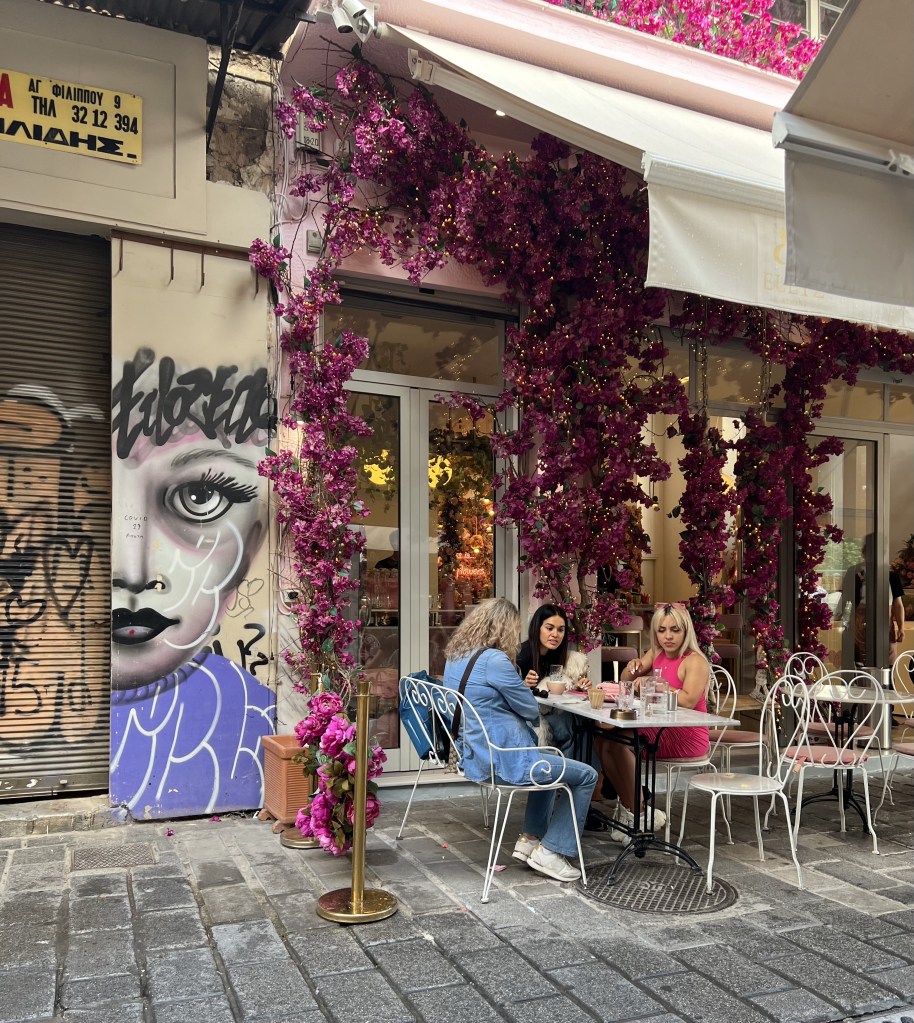
Changing your focus is a skill you can develop wherever you are that will improve your creativity. This is another awareness exercise. I will use the photo above that I took and walk through various ways you can filter what you are seeing. We do this naturally without thinking about it, but artists practice doing it with intention. Here are some of the many ways you could see this image:
Line – What types of lines are you seeing? I see straight, curved, vertical, diagonal, thin, and thick lines. Are there any relationships between the lines? For example, I find that the curvy lines in the chairs echo the curvy white lines in the graffiti on the left. I could probably do something with that creative connection, but for this exercise I’m just noticing things!
Color – Color is everywhere, but what are some ways we could organize it? Do you notice how the warm pinks contrast with the cool blues? And the women’s outfits coordinate with the setting serendipitously? What are some colors you didn’t notice right away, but can see now? Maybe the yellows in the sign in the top left or in the lights inside the cafe?
Texture – How many different types of texture can you see here? Try to name them. I see a ribbed texture on the garage door on the far left. The course texture of the paving stones on the ground. Soft textures in the flowers and the clothing. There are super smooth textures indicated by the reflections on the windows. Each one contrasts the others enhancing them even further.
Rhythm – What can we say about the rhythms here? I notice two dominant rhythm patterns. First, there is the very regular rhythm set up by the evenly spaced pavers on the ground and windows. Then, there is the much more lyrical rhythms set up by the graffiti lettering, the flowers, and the intertwining of the chairs. This is no different than when a drummer taps out a repeated even beat underneath a lyrical guitar solo. It’s the visual version of music.
You can go as deep as you wish looking at this scene (or any scene) and continue to shift your awareness to different things. Some other “filters” you may want to try include: values, space, balance, unity, patterns, variations, repetition, contrast, emphasis, story…)
50 Questions
Expand video for best viewing (lower right corner)
This is a variation on the creativity exercise “100 questions” from Michael Gelb’s book, How to Think Like Leonardo Da Vinci. Creativity involves getting curious about things. In the original exercise you simply make a list of 100 questions about anything that intrigues you. In my version, you can narrow the number of questions down to 50, and you begin with a specific topic and build your questions around that. In the example above I use the topic of Cooking. I would stick with at least 50 questions, as the first several tend to be obvious and mundane. It’s once you start running out of questions that you begin to ask more interesting ones. You can do this exercise simply with pen and paper.
In the design process you want to keep your initial ideas wide open. There’s no need to edit these. Some of your questions will seem crazy, silly, or outrageous. This is what you want. When you finish, go back and read through them. Maybe one or two will develop into the seeds for a more developed idea. If you want to really get into this, go ahead and continue to 100 questions. This is great for any area of your life where you feel stuck and need to kick your creativity into high gear!
Thinking Creatively About What You Wear
Every day you go into your closet and choose an outfit to wear. Some of us just grab what is most accessible and throw it on. But did you know that you can infuse a little creative thinking into what you are wearing? It’s a great way to practice thinking about some of the elements and principles of design that artists are so good at using. When you assemble your outfit with intention you make your clothes an artistic expression. In the video below you can see and hear a little about the thought process of how you might start being more creative with your outfit ensembles. Listen for how she talks about shape, balance, color, texture, pattern, and variety!
Looking Closer for Ideas and Inspiration
Sometimes we get stuck for ideas because we fall into our usual habits of seeing things. Creativity usually happens when we break free of those habitual ways of experiencing something. Macro photography is something you can do to help you see things in a different way. Macro photography is simply a photograph of something zoomed in so far that it is sometimes unrecognizable, but we see aspects of that thing we may miss otherwise. You can spend thousands of dollars on macro lenses and cameras, but you don’t have to. I took the images below with an iPhone. Don’t let not having the perfect equipment be an excuse for not being creative.
Try to take a few minutes and either walk around your house, go for a hike, or even make a day out of it exploring the city. The only thing you need is your phone camera and decent lighting. Again, if the lighting isn’t great, don’t use that as an excuse to not be creative. You might even get some results you wouldn’t have seen with the “proper” lighting. A lot of the creative process is just playing around. You might be surprised at the great number of artworks that were sparked by accidents.
From Sound to Sight
Grab your favorite pen, some paper, and put on some music! Creative ideas come when we begin to experience things differently. This little exercise lets you do just that. You don’t need any special artistic abilities to do this. The end product may or may not be something you want to keep, but the process is great for building your creative muscles.
First, choose some music you like. It could be classical, bossa nova, jazz,…whatever you wish. The only constraint for the music is that it needs to be instrumental (no lyrics). All you’re going to do is start moving your pen when the music starts, and begin to draw what comes to you as you hear the sounds. The drawing could involve imagery, but it could also just as well be lines, shapes, dots, doodles. Try to feel the sounds. Are they smooth and rounded? Are they sharp and sudden? Is there space between the sounds or are they packed tightly together? Try not to anticipate the outcome, and certainly don’t overthink it. As long as you keep your pen moving things will come. You can do everything with one pen or you might want to have several different colored pens on hand in case the sounds bring up certain colors for you. Draw for as long as you wish. I sometimes do this when I’m having a creative block. It will usually clear it right up, but even if it doesn’t it’s a great way to relax your mind and de-stress!
Expand video for best viewing (lower right corner)
Playing Around With Letters
Expand video for best viewing (lower right corner)
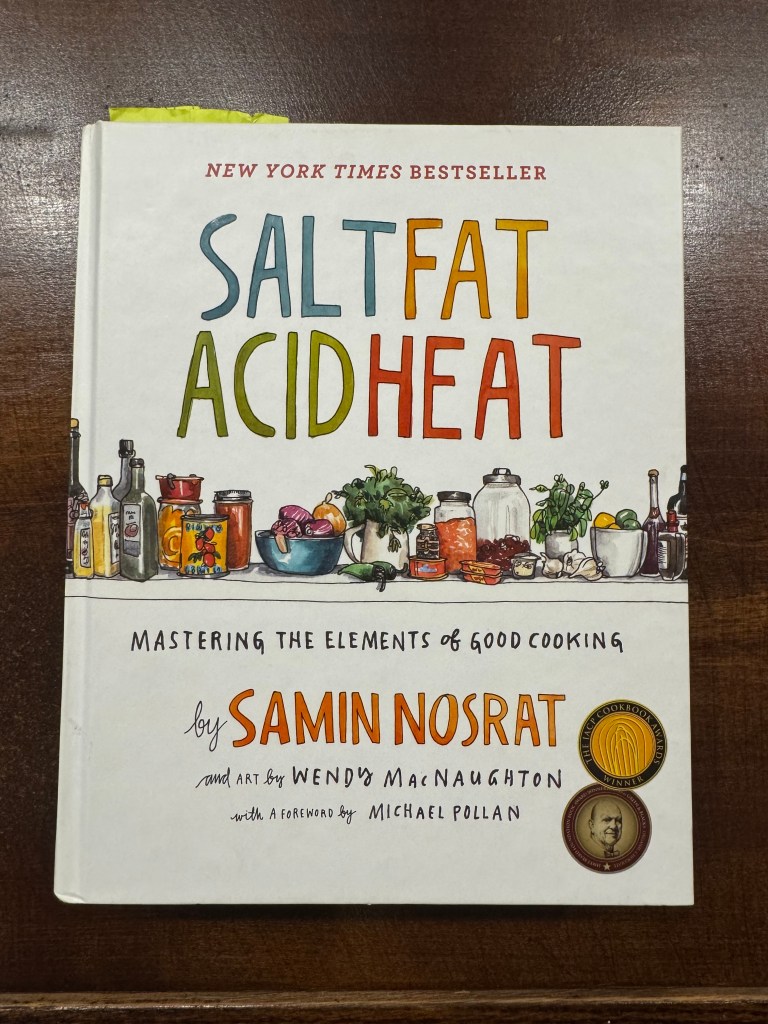
Book Recommendation: Salt, Fat, Acid, Heat by Samin Nosrat
This is not only a brilliant book on cooking, it is also a master class on learning to use your creativity! In essence, you find the foundational principals of whatever it is you are doing and build around those. Learning to cook without having to follow a recipe allows your creativity to flourish in the same way that learning to paint without following a step-by-step process allows you to tap into your imagination.
For example, in the book the author talks about a process she calls anchoring. This is where you choose one element of a dish and make it the foundation upon which you build a meal. The anchor could be an ingredient, a cooking method, or even a limitation. This is exactly the same method I use when creating a series of artworks! It’s also full of beautiful illustrations and graphic organizers painted by Wendy MacNaughton.
Haiku and Being Creative With Your Language
Haiku is a great way to practice using your words more creatively. For those who are unfamiliar with Haiku, it is a Japanese form of poetry that consists of 17 syllables and written in 3 lines. The syllables are divided as 5 in line 1, 7 in line 2, and 5 in line 3. Here is an example:
the weather is warm
a breeze whispers through the sky
nothing is better

Since Haikus are short you can write them quickly. I used to write one each day. Thinking of words in syllables is a way that we normally don't do in day to day interactions. So, the structure of haiku provides some constraints, which actually help us to be more creative. The intent with this exercise is to write an original haiku. Traditional haiku are about nature, but you can write one about anything! Then, try to express the same thing in two more haikus using different words, but still adhering to the correct syllable format. Based on the example above, here is an example of how I might do that:
the cool air has left
the wind blows softly outside
these are the best days
Or this….
warmth has replaced cold
movement awakens the world
experience joy

As with most creativity exercises, don't worry about how good or bad these are. You're engaging in the creative process. That's the important thing. Build daily creative habits! In its simplest definition creation is the act of making something that didn't exist before you made it. So, you create all the time, but "creative" people make things more mindfully. This exercise helps you to connect sound to meaning and increases your repertoire for expressing yourself.
Use Randomness to Generate Ideas
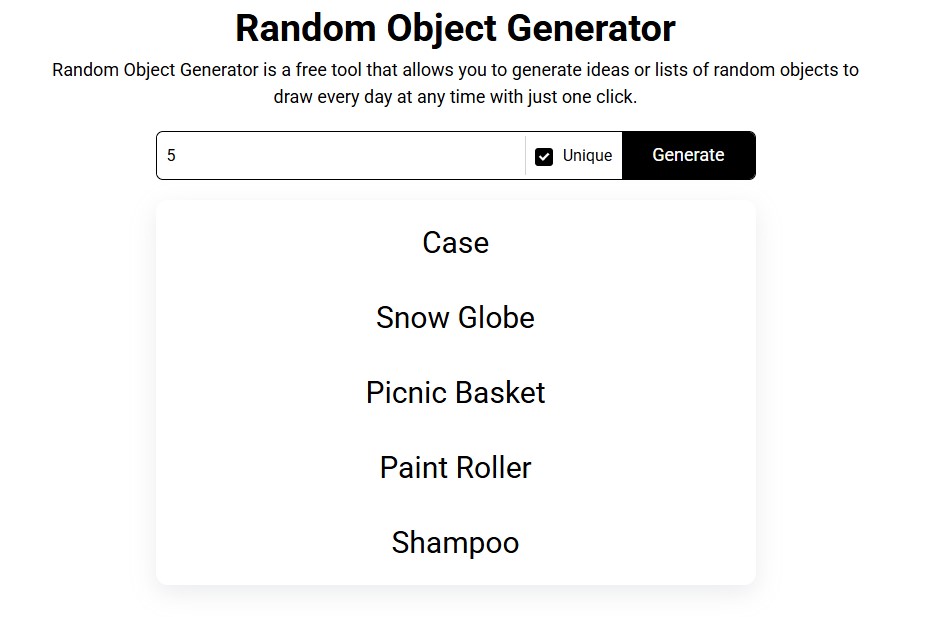
Using random word generators or even just random ideas drawn from a hat can help you get out of creative ruts. In this exercise you can use 3-5 randomly generated objects and try to combine them in some way. You could combine them in a drawing, a poem, a song, or maybe the beginning of a short story. Look at the example below. Here I used a random word generator from the website https://randomobjectgenerator.org to randomly select 5 unique objects. Then, I used them to start writing the beginning of a short story.
The generator gave me the words case, snow globe, picnic basket, paint roller, and shampoo. I used the words to construct the following text:
“I must have gotten a wild hair to change the color of the bedroom color last night. Speaking of wild hair, I think I got a little paint in mine after one too many glasses of wine. I had to stop mid-painting and shampoo it before it dried. After I got out of the shower I was getting hungry, so I thought why not go get the picnic basket and make a picnic right in the middle of the bedroom?!? My youngest daughter walked in carrying the snow globe she had gotten for Christmas. She asked if she could join me, so I said, “sure”. I leaned my paint roller on the wall and we had an impromptu picnic right there in the bedroom! In case you are wondering, it was fantastic!”
I would have never thought of writing anything like this had I not taken the random suggestions. This could be a seed that I could build on to create an entire story around. It’s not meant to be a finished product, but it does get ideas moving. Creativity is all about making connections. It’s kind of a silly story, which is great because creativity also flourishes during play. Make playful connections!
What’s the Story Here?
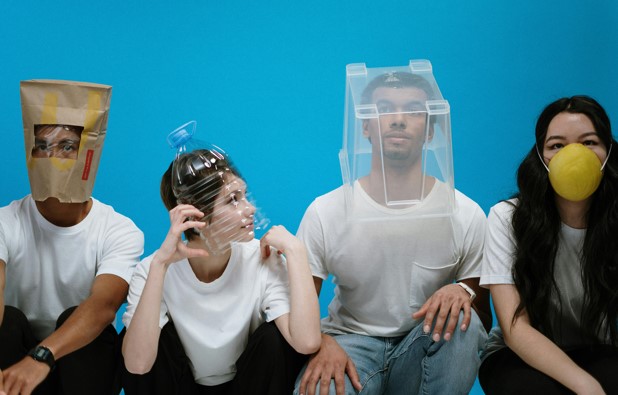
Visual artists often create images from stories or scenarios they have experienced. What would happen if you reversed that idea? In other words, how might you create some possible scenarios from an image? This works best using a photo that you are unfamiliar with. You don’t want to be tempted to give the real story behind the photo. You want to create one! Actually, try to create three possible scenarios from the same image. This will help you to connect ideas by observing details. I’ll give you some possible examples based on the photo above.
Scenario One: These 4 friends were all in the same science class together. They were assigned a group project to design a Covid mask using only materials they could find around the house. They are seen here brainstorming ideas.
Scenario Two: This was a police line up of the world’s worst bank robbery suspects dressed in the disguises they wore while attempting their crimes. It was later discovered that they were all a part of the same crime ring.
Scenario Three: These two couples went on a double date and ended up bonding over their mutual love of avant garde fashion, specifically very niche headwear. This photo captures the moment Helen realizes she has found her soul mate!
These can be fun and playful like I’ve done here, but they could also go in a more serious direction. Either way, it is a small act of creation that you can use to develop your creative capacities. Who knows, maybe one of your ideas will develop into something more elaborate.
Creative Cooking
If you like to cook here is an interesting thing you can try. I got this idea from the TV show Chopped. It involves creating a dish with ingredients chosen by someone else. Typically, there are 4 ingredients, and one is usually something you wouldn’t expect. You can add other ingredients, but you must use the 4 chosen for you in some way. This is a great creativity challenge because it imposes some creative constraints and it also involves all of your senses, which are your interface with the world. The more you can involve all of your senses in things like this the better connections you will make. Give it a try! Just remember, you need to be OK with possible “failure”. This is a huge part of developing creativity in your life. You learn something whether the outcome is successful or not. If it scares you too much you can always have back-up dinner plans!
You could also do variations on this challenge such as:
ONLY using the 4 ingredients (no add-ins allowed)
Restrict the type of dish (main, side, dessert, etc…)
Ask 4 different people for one ingredient each (increases challenge)


 Trevor Ledford